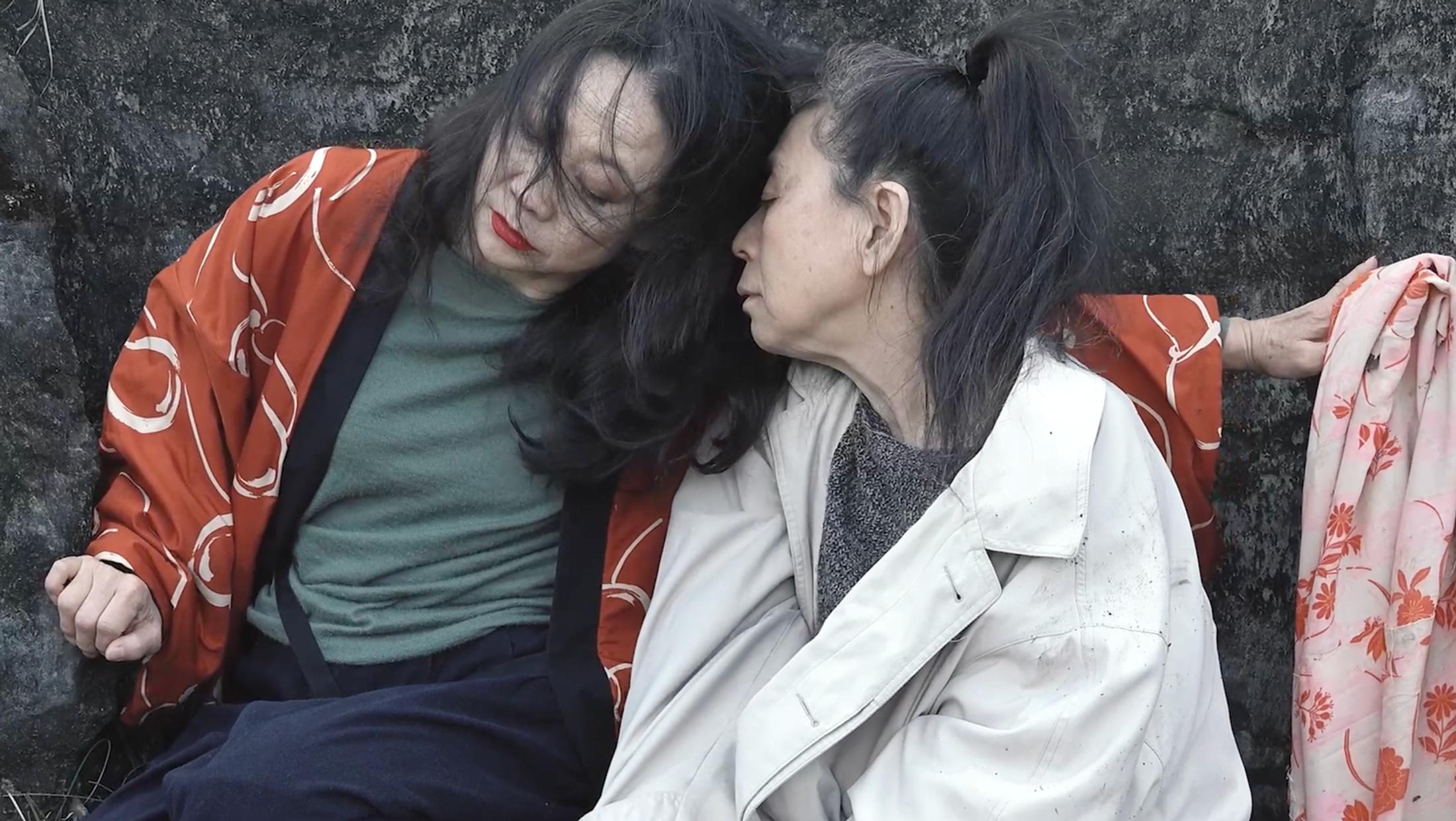
Composed from unscripted video diaries filmed in Beijing in 2020, this documentary traces the beginnings of Eiko Otake and Wen Hui’s artistic collaboration, laying the groundwork for What is War.

This documentary accompanies the evening performance, featuring a short Q&A with Eiko Otake following the screening.

Summary Block

This block has no content yet. Items you add to the page connected to this block will display here.

This is a story of friendship between two independent female artists and their body memories each willingly carry. In January 2020, New York based, interdisciplinary performing artist Eiko Otake arrived in Beijing to visit Wen Hui, a Chinese choreographer and filmmaker. Eight years apart, Eiko grew up in postwar Japan and Wen during the Cultural Revolution. They planned to visit each other for a month to converse and collaborate. The surge of COVID-19 abruptly cut off Eiko's visit and the pandemic has so far made Wen's visit to the USA impossible but not the collaboration. Looking back on the video diaries they shot without a script, Eiko and Wen continued their dialogue on Zoom, sharing past works that form a deeper understanding of their circumstantial differences and characteristic similarities. Chinese film director Yiru Chen, once Eiko’s student, joined the team as a co-editor.

No Rule Is Our Rule has been selected by Sans Souci Festival of Dance Cinema, Munich New Wave Film Festival, and Kalakari Film Festival, and the film has received awards at the Japan International Film Festival, WRPN Women’s International Film Festival, and Toronto Indie Filmmakers Festival. The film has also been screened at Asia Society New York, Asian Arts Initiative, and several universities, including Wesleyan University, Yale University, Duke University, and Cornell University.

October 11, 2025 | 4pm
Studio Theater
Free with RSVP
About the Artists

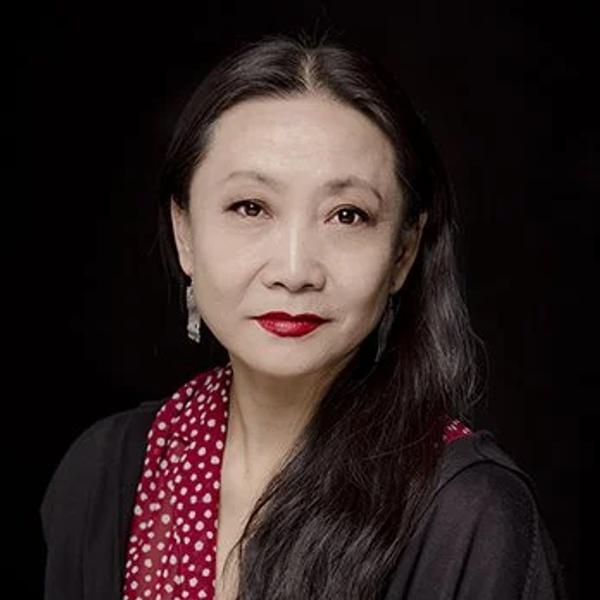
Eiko Otake(she/her)

Eiko Otake

she/her

Born and raised in Japan and a resident of New York since 1976, Eiko Otake(she/her) is a movement-based, interdisciplinary artist. She worked for more than 40 years as Eiko & Koma, but since 2014 has been working on her own projects.  Eiko & Koma created numerous performance works, exhibitions, durational “living” installations, and media works commissioned by the American Dance Festival, BAM Next Wave Festival, the Whitney Museum, the Walker Art Center, and the Museum of Modern Art, among others.  In addition to performing their own choreography, Eiko & Koma handcrafted their own sets, costumes, and sound.

TheRetrospective Project (2009–2012) culminated in two exhibitions, screenings of media works, and a comprehensive monograph, Time is Not Even Space is Not Empty, published by the Walker Art Center. Eiko & Koma were the first collaborative pair to share a MacArthur Fellowship (1996) and the first Asian choreographers to receive both the Samuel H. Scripps American Dance Festival Award (2004) and the Dance MagazineAward (2006). They were honored with the inaugural United States Artists Fellowship (2006) and the first Doris Duke Artist Awards (2012).

Eiko’s solo project, A Body in Places, began with a 12-hour performance at the 30th Street Station in Philadelphia in 2014. Since then, she has performed site-specific variations of A Body in Places at over 70 sites,  including a month-long Danspace Project PLATFORM (2016) and three full-day performances at the Metropolitan Museum of Art (2017). Collaboratively created with photographer and historian William Johnston, A Body in Fukushima (2014–) is a multifaceted project that records Eiko‘s solo performances in post-nuclear disaster Fukushima. It consists of photo exhibitions, video installations, mix-media performances, lectures, a book publication, and a feature-length film that has been screened at festivals internationally.

The Duet Project (2017–) is a series of experiments with artists of different disciplines, races, genders and generations. The project has produced performances and media works, including feature length documentary No Rule is Our Rule, collaboratively created with Wen Hui. Eiko is currently working on her 10-year project, I Invited Myself (2022–), a series of exhibitions and screenings of her media works.  A recipient of an honorary degree from Colorado College (2020), she teaches a course that combines  studies of atomic bombings and nuclear disaster with movement  at Wesleyan University, New York University, and Colorado College.

@eiko_otake

eikootake.org

Artist page →

Wen Hui(she/her)

Wen Hui

she/her

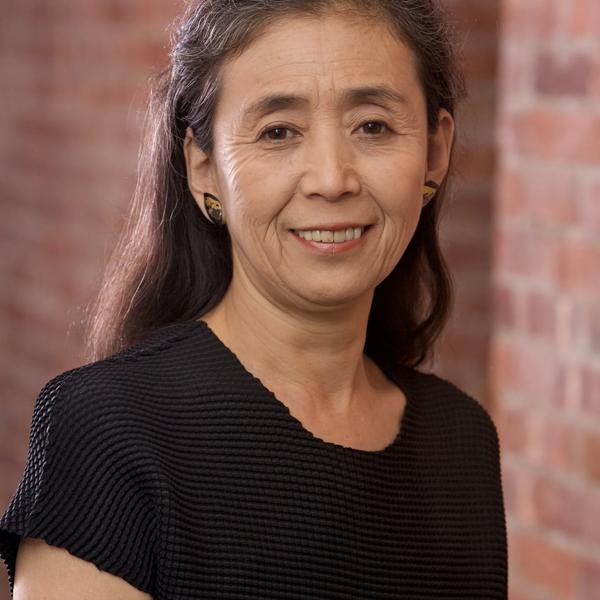
Chinese choreographer and dancer Wen Hui (she/her)is one of the pioneers of Chinese contemporary dance. She also makes documentary films and installations. For the past thirty years, Wen Hui has been using dance theater as a means of social intervention. Since 2008, she has been researching the body as a form of personal social documentation and experimenting with how bodily memory can catalyze the collision between history and reality.

A graduate of the Beijing Dance Academy in 1989 with a degree in choreography, Wen Hui studied modern dance in New York in 1994. She also received a 1997-1998 fellowship from the Asian Cultural Council to continue her studies in New York.  From 1999-2000, she worked with Ralph Lemon’s Dance project, Geography Trilogy II – Trees, and toured the U.S. with the company including the BAM Next Wave Festival in New York in 2000.

In 1994, Wen Hui co-founded the first independent dance theater group in China, the Living Dance Studio, in Beijing. In 2005, Wen Hui and Wu Wenguang established the Caochangdi Workstation and co-curated The Crossing International Dance Festival in Beijing. The same year, they initiated The European Artists Exchange Project and Young Choreographers Project. In 2015, Wen Hui curated the ReActor Project at Shanghai Museum of Contemporary Art (Power Station of Shanghai).

Wen Hui’s work and that of the Living Dance Studio have been invited to perform at the most provocative international stages and festivals, including her Report on Body at the Walker Art Center in 2003. Her two films, Dance with Third Grandmother and Dance with Farm Workers, were shown in the Chinese Pavilion at the 2015 Venice Biennale. Dance Only Exists When It Is Performed is a set of two solo exhibitions featuring Yvonne Rainer and Wen Hui at the Beijing Inside-Out Art Museum in 2019. Her exhibition, The Arts of Memory, was shown at the Guangzhou Image Triennial in 2021. Wen Hui’s solo work, I am 60, was presented at Festival d’Automne in Paris and at the 2021 Ruhrtriennale in Germany. Her newest work, New Report on Giving Birth (2023), was also presented at the Festival d’Automne, Rhine-Main Dance Festival at Künstlerhaus Mousonturm in Frankfurt, HAU Hebbel am Ufer in Berlin, HELLERAU European Art Center in Dresden, and at PACT Zollverein in Essen.

In 2004, her Report on Body won the ZKB Patronage Prize by Zürcher Theater Spektakel.

In 2021, Wen Hui received the Order of Merit of the Federal Republic of Germany, known as the Goethe Medal.

Artist page →

Fumihiro Kikuchi(he/him)

Fumihiro Kikuchi

he/him

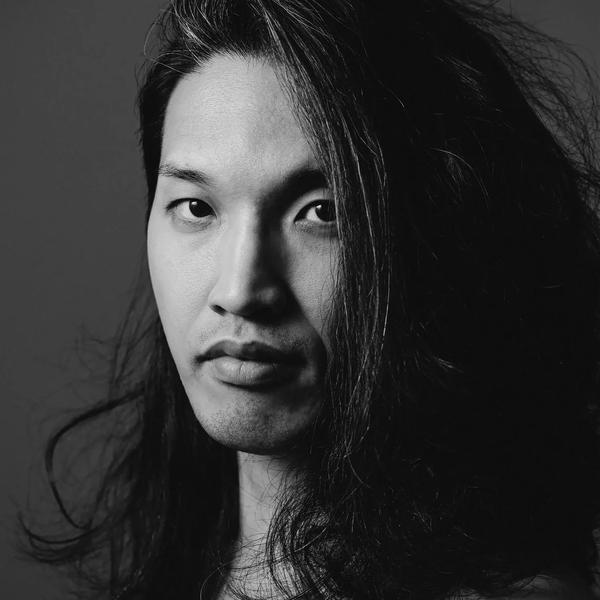
Fumihiro Kikuchi (he/him) is a Japanese interdisciplinary dance artist, choreographer, dancer and teacher. His works have been shown in Arizona, California, New York, Vermont, Spain and Germany. Kikuchi was invited as a guest artist at Sichuan Arts Festival - Contemporary Arts Performance Season in China (2019) and as a guest choreographer at California State University, Fresno in 2016 and 2018. He holds his MFA in Dance from Arizona State University and his BA in Theatre Arts and Dance from California State University, Fresno. Kikuchi is currently working as a stage technician at On the Boards.

Artist page →